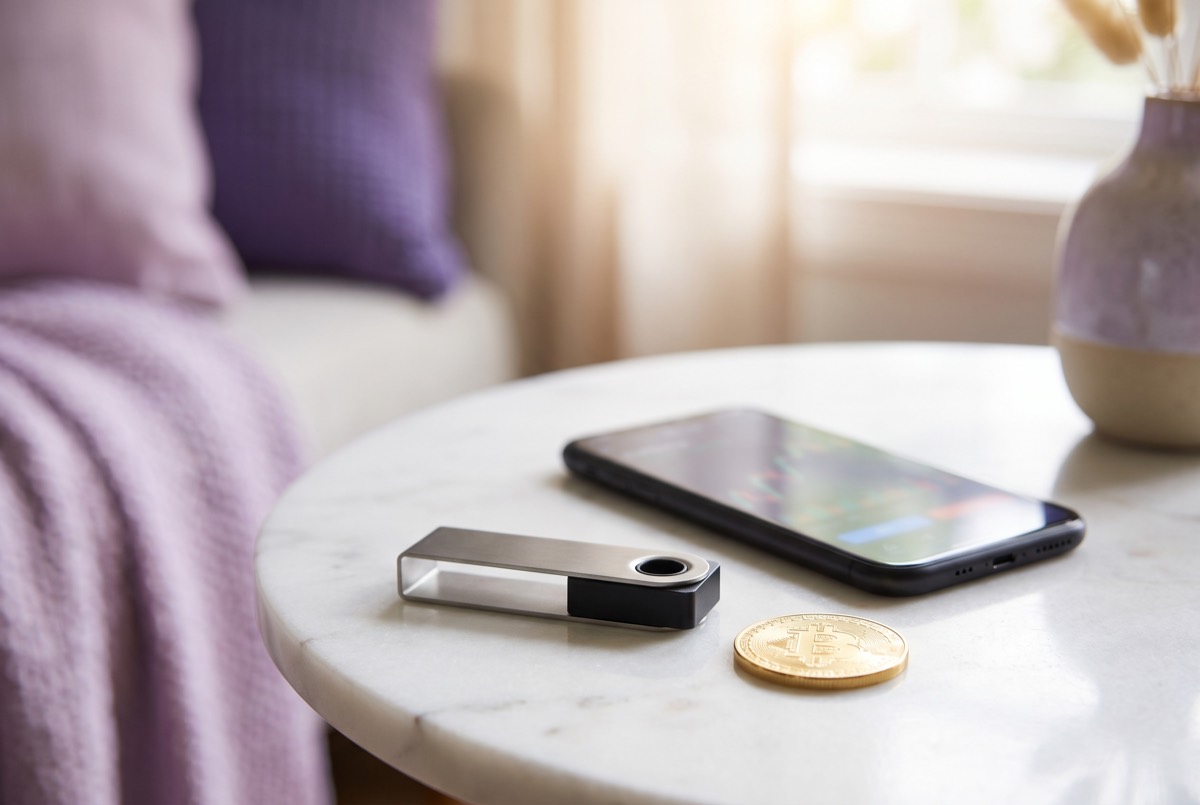
- A stablecoin (USDT, USDC) is a crypto-asset pegged to the dollar. Since the European MiCA regulation (regulation (EU) 2023/1114), tokens pegged to a single official currency can only be issued in the EU by a licensed credit or electronic money institution.
- Getting paid in USDT or USDC is lawful, but it is neither a way to escape the tax office nor a way to escape the bank: the income is taxable at its euro value on the day you receive it.
- Tokens received for work are ordinary income at their value on the day you receive them — not a capital gain. The capital gain comes later, on the day you sell: short- or long-term capital gain in the US, Capital Gains Tax at 18% or 24% in the UK.
- Reporting is closing in: Form 1099-DA in the United States, and the Cryptoasset Reporting Framework for transactions from 1 January 2026, with the first reports to HMRC due by 31 May 2027.
- The real risk is cashing out: a transfer arriving from a crypto platform triggers the bank's due diligence, and it will ask for the source of funds. Document every payment from the first one.
Texts and figures checked on September 2, 2026. Sources are listed at the end of the article.
"We can pay you in USDT, it's simpler." The phrase comes up in exchanges between agencies and creators, between agencies and chatters, and more and more often after a bank account has been closed. Being paid in crypto for OnlyFans content or chatting is not unlawful. But the promised simplicity stops the moment you have to declare the income, then convert the tokens into ordinary currency in an account that accepts that flow. What stablecoins are, how the US and UK tax authorities treat them, and what has to be documented: it is all here.
USDT, USDC: what a stablecoin is
A stablecoin is a crypto-asset designed to keep a fixed value against an official currency, most often the US dollar. USDT and USDC are the two most used: one token is worth, in principle, one dollar, because the issuer holds equivalent assets in reserve and undertakes to redeem at face value. They move between wallets in minutes, with no intermediary bank, no opening hours and no borders. That is what appeals to the industry, and it is also what worries banks: a stablecoin transfer carries no sender name, no reference and no country of origin a compliance analyst can read.
Why the OFM industry gets paid in crypto
Three uses dominate. Paying chatters: an agency working with freelance chatters in the Philippines, Eastern Europe or Latin America finds in USDT a fast means of payment, with no international bank fees and no local account to open. Responding to an account closure: a creator or an agency whose bank has terminated the relationship turns to stablecoins to keep receiving their share. Holding dollars, to avoid exchange rate exposure.
OnlyFans itself does not pay creators' earnings in crypto-assets: its terms provide for payouts in dollars, by bank transfer or electronic wallet, which we set out in our comparison of OnlyFans payouts. Stablecoins appear downstream, between the agency and the creator, between the agency and its chatters, or when a creator converts her own dollars. Each of those links is a flow to be explained.
Not every stablecoin is the same
The two names you will be offered are USDT and USDC, and they are not interchangeable from a compliance point of view.
USDC is issued by a regulated entity, publishes monthly attestations of its reserves, and holds an electronic money institution licence in the European Union under the MiCA regulation. USDT is the larger of the two by volume, but its issuer is not licensed in the EU, which is why most European platforms stopped offering it for purchase during 2025.
Why that matters to you, wherever you live: the platform you eventually use to convert into dollars or pounds is a regulated business, and it will apply its own checks to the token, the counterparty and you. In the United States, the GENIUS Act of 2025 created a federal framework for payment stablecoins, pushing the market in the same direction — licensed issuers, disclosed reserves, redemption at par.
One reflex before any conversion: check that the platform you use is registered or licensed where it operates — a money services business registered with FinCEN in the US, a firm on the FCA's cryptoasset register in the UK. A transfer from an unregistered platform is, for your bank, a source of funds it cannot document.
The tax rule everyone gets wrong
Here is the single most expensive misunderstanding in this article, and it is the same in both countries.
Tokens received in payment for work are income, on the day you receive them. Not a capital gain. Not something that becomes taxable "when I cash out". A creator, a chatter or an agency paid in USDT for a service receives ordinary business income, valued in dollars or pounds at the market value on the date of receipt.
In the United States, that is settled: property received for services is included in gross income at its fair market value when received, and for a self-employed creator it goes on Schedule C and carries self-employment tax like any other receipt. See OnlyFans taxes in the US.
In the United Kingdom, HMRC's Cryptoassets Manual says the same: tokens received in return for services are trading income, brought in at their sterling value on the day of receipt, and taxed with the rest of the profit. See OnlyFans tax in the UK.
The second event comes later. When you dispose of the tokens — selling them for dollars or pounds, or spending them — the difference between their value when you received them and their value when you disposed of them is a capital gain or loss. In the US it is a short-term gain if held a year or less, taxed at ordinary rates, and long-term beyond that. In the UK it is Capital Gains Tax at 18% or 24% depending on your band, after the annual exempt amount of £3,000. With a dollar-pegged stablecoin the movement is usually small — but "small" is not "nil", and it still has to be recorded.
Two practical consequences. Every payment received must be dated and valued in the currency you report in, with the rate used. And an agency paying its chatters in USDT must receive invoices showing the equivalent value, exactly as for a bank transfer; those chatters' status is covered in our guide on chatter status.
What the tax authorities are about to receive
The era in which crypto payments were invisible is closing, on a published timetable.
United States. Brokers report digital asset dispositions to the IRS on Form 1099-DA, phased in from the 2025 tax year for gross proceeds and extended to cost basis afterwards. Separately, every US tax return carries a digital asset question at the top of Form 1040, answered under penalty of perjury — a detail worth taking seriously, because a false answer there converts a tax problem into a different kind of problem. Foreign account reporting is its own question: FinCEN has signalled an intention to bring virtual currency accounts within FBAR, and rules on the point have moved more than once, so check the current position with your CPA rather than assuming either answer.
United Kingdom and the OECD. The Cryptoasset Reporting Framework (CARF) applies to transactions from 1 January 2026. Platforms must identify their users, establish their tax residence and report their transactions, with the first reports due to HMRC by 31 May 2027 for the 2026 calendar year, and then exchanged internationally. CARF changes nothing about how crypto is taxed; it changes everything about whether HMRC can see it.
The mechanism is exactly the one that already exists for OnlyFans income itself, applied to the crypto rail. Expect the same consequence: a figure arriving at the tax authority, compared with your return, and a letter where the two do not match.
The real risk: cashing out, and the bank
The day you convert your USDT into dollars or pounds and transfer the proceeds to your bank account, your bank sees a transfer arriving from a sender classified as "crypto", into an account that may already receive OnlyFans payments: two risk factors stacked in its internal classification. It then applies the ongoing monitoring every regulated institution owes, and for an unusual amount an enhanced review: where do the funds come from, what activity generated them, why did they pass through crypto-assets.
Without a documented answer, the transfer is blocked, then the account closed, and the next one will be harder to open. The difference is not the amount, it is traceability: a transaction history exported from the platform, the invoices or contracts explaining each payment received, and proof that the activity is declared. We describe what an analyst looks at in our guide to KYC and source of funds.
For an agency, the question arises earlier: paying chatters in USDT from a company account assumes that the institution holding that account accepts outgoing transfers to a crypto platform. Some do, others do not, and the list changes; we keep it up to date.
What to document from the first payment
Everything a bank analyst or a tax inspector might ask for must exist before it is asked for. For each stablecoin payment:
- the date, the amount in tokens, the euro equivalent and the rate used;
- the document explaining it: invoice, management contract, chatter's services contract;
- the sending wallet address and the counterparty's name;
- for each platform used: where it is licensed or registered, and under whose supervision;
- for each conversion into ordinary currency: the exported platform history and the matching bank statement.
Kept as you go, that file takes ten minutes a month. Reconstructed two years later, under pressure from a bank or an audit, it takes weeks and leaves gaps. Stablecoins are useful for paying abroad and for surviving an account closure; they are neither a tax shelter nor a lasting substitute for an account that accepts your business.
Frequently asked questions
Is it lawful to be paid in USDT for OnlyFans content or chatting?
How is USDT received as payment taxed?
Must I declare my account on a foreign crypto platform?
Can my bank refuse a transfer coming from a crypto platform?
Sources and legal texts
- Frequently asked questions on virtual currency transactions (property received for services is income at fair market value) Internal Revenue Service, Notice 2014-21
- Digital assets Internal Revenue Service, Form 1099-DA
- Cryptoassets Manual: tokens received in return for services HM Revenue & Customs
- Capital Gains Tax: rates and annual exempt amount GOV.UK, 18% and 24%, £3,000 for 2026/27
- Domestic reporting of UK resident cryptoasset users under the Cryptoasset Reporting Framework GOV.UK, transactions from 1 January 2026, first reports by 31 May 2027
- Cryptoasset firms: registration under the Money Laundering Regulations Financial Conduct Authority
- Money services business registration FinCEN

This article is general information and does not replace advice tailored to your situation. OFM Legal is not a law firm: court proceedings are handled by our partner lawyers.