- In the US, the right of publicity is state law: California's Civil Code section 3344, for example, makes the knowing commercial use of someone's likeness without consent actionable, with at least $750 in damages plus profits.
- English law recognises no free-standing image right, as the Court of Appeal confirmed in the Rihanna v Topshop case; creators rely instead on privacy, copyright, data protection, contract and the intimate image offences.
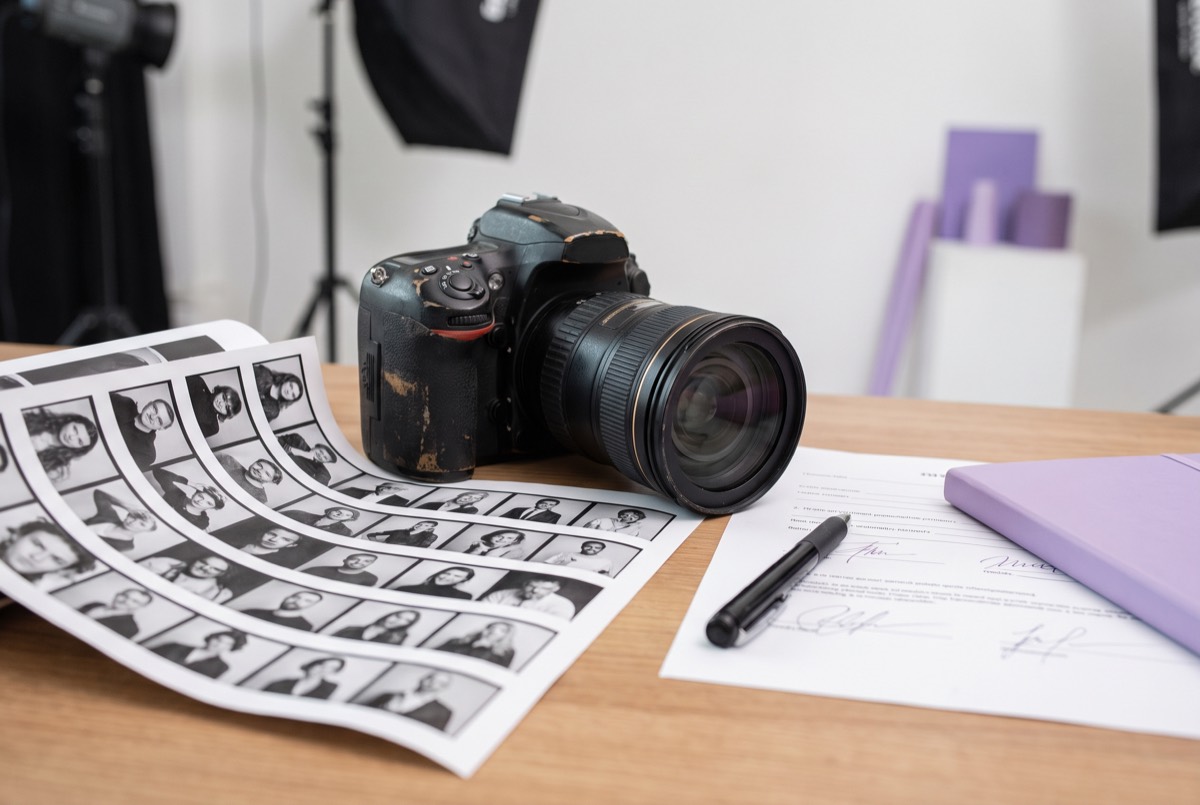
- Image and copyright are different things: in a photo taken by the agency's photographer, the likeness is yours but the copyright is his, unless assigned in writing and signed, a rule shared by US and UK law.
- A licence to use your image is a contract: it should state its duration, media, purposes and territory, and one with no end date is the one to renegotiate first.
- Deepfakes, AI clones, reuse after you leave: takedowns, a letter before action, an injunction and damages are all available, and sexual deepfakes are now criminal in both countries.
Texts and figures checked on October 6, 2026. Sources are listed at the end of the article.
Image rights let you control how your face, body and likeness are captured, used and exploited by others. For content creators, the key point is that publishing on OnlyFans, MYM or Instagram means authorising one use, not giving up your image. But "image rights" mean different things on each side of the Atlantic: in the US, most states protect your likeness through a right of publicity; English law has no free-standing image right and protects you through a patchwork of privacy, copyright, data protection and contract. This guide explains what you really license to an agency or platform, what makes a licence sound, ending one, the difference with copyright, what AI changes, and the remedies in the order to use them.
What protects a content creator's image?
In the United States, the right of publicity is a matter of state law. California is the reference: Civil Code section 3344 makes liable anyone who knowingly uses another person's name, voice, signature, photograph or likeness for advertising or selling without consent, for the greater of $750 or actual damages, plus the profits attributable to the use. Many other states have a statute or a common-law equivalent; the rules differ on who is protected and what counts as commercial use. Privacy torts and false endorsement claims complete the picture.
In England and Wales, the Court of Appeal confirmed in Fenty v Arcadia (2015), the case Rihanna brought against Topshop over a T-shirt bearing her photograph, that English law recognises no image right, meaning no general right to control the use of one's name and likeness. Rihanna won, but on passing off, because shoppers were likely to think she had endorsed the product. For a creator, protection comes from elsewhere: misuse of private information for private images, copyright in content you made, data protection, contract, harassment law, and the intimate image offences of the Sexual Offences Act 2003.
A creator grants many permissions: to the platform to distribute, to the agency to promote, to the photographer to use his pictures. Each one covers a defined use. Anything outside it becomes actionable: paid content reposted on a leak site, a photo reused by the agency after you leave, a face inserted into an AI-generated video.
Online, data protection adds a second layer in the UK: the image of an identifiable person is personal data. You can ask an organisation to erase it, and it has one calendar month to respond; if it does not, you can complain to the Information Commissioner's Office or go to court.
Image or copyright: who holds what?
Your likeness is protected, where it is protected, through publicity, privacy and data protection rules. Copyright protects the person who created the work: the photo, the video, the edit. Both exist on the same file without necessarily belonging to the same person.
| Content | Your likeness | Copyright |
|---|---|---|
| Selfie, video you shot yourself | You | You |
| Photos by the agency's freelance photographer | You | The photographer, unless assigned in writing |
| Photos by an employee of the agency, as part of the job | You | The agency, as employer, unless agreed otherwise |
| Content shot with another person | Each person visible | Depends on who filmed and edited |
| AI-generated image built from your photos | You, if you are recognisable | Uncertain: copyright protects human authorship |
Two consequences. First, an agency that commissions and pays for a shoot does not own the copyright just by paying. In the US, a commissioned photograph is generally not a "work made for hire", so the photographer owns it unless he assigns it, and any transfer of copyright is invalid unless it is in writing and signed by the owner (17 U.S.C. § 204). In the UK, the author is the first owner, with an exception for works made by an employee in the course of employment (section 11 of the Copyright, Designs and Patents Act 1988), and an assignment is not effective unless it is in writing signed by the assignor (section 90). Second, the photographer who owns the copyright still cannot exploit pictures of you commercially where your publicity, privacy or data protection rights apply. To use content, both sets of permissions are needed.
What you license to a platform or an agency
To a platform
A platform does not become the owner of your content, but it takes a licence, sometimes a very wide one. OnlyFans' terms have you grant it a licence over all your content for any act related to the operation of its services, including improving them, and describe that licence as perpetual, non-exclusive, worldwide, royalty-free, sublicensable, assignable and transferable. Platform terms are not negotiable: read them before posting, keep a dated copy of the version you accepted, and remember that they give your agency no rights at all.
To an agency
An agency needs permission to post your content, promote it and sometimes edit it. That is normal. What is not normal is a clause that turns that working permission into giving up your image: a licence that is "worldwide, perpetual and irrevocable, in all media now known or later devised", a right to resell or sublicense, to use your content on other accounts, to exploit it after the contract ends, or to train an AI tool. We go through that clause and how to negotiate it in our article on the 12 key clauses of an agency contract.
The right wording fits in one sentence: the agency may use your image and content to promote the listed accounts, on the listed platforms and networks, for the duration of the contract, and deletes the copies it holds when the contract ends.
Model releases and licences: the limits of a sound permission
In both countries, a model release or image licence is a contract, and courts read it for what it says. A broad licence can be valid; a vague one invites a dispute, and in the US a right-of-publicity claim turns on whether the use fell within the consent actually given.
| Point | What should be written | What should worry you |
|---|---|---|
| Duration | The term of the contract, or a fixed period | "Perpetual", "irrevocable", no end date |
| Media | Platforms and networks named one by one | "All media now known or later devised" |
| Purposes | Promotion of the listed accounts | Resale, sublicensing, AI training, advertising for third parties |
| Territory | Worldwide if needed, but tied to the listed uses | Worldwide scope combined with unlimited uses |
| Excluded contexts | No use outside the listed accounts | Complete silence on context |
| Payment | The link with the commission or income | Nothing in return for a wide licence |
The broadest clauses are also the ones that surface most often in disputes, usually at the moment of separation, when the agency's view of what it was allowed to keep meets the creator's.
Can you end a permission to use your image?
A fixed-term, paid licence binds you until its end. A two-year licence, paid, for defined uses, cannot be withdrawn overnight without risking a claim from the other side. Two routes remain open: a breach by the agency (income not paid over, content used outside the agreed scope), which can justify ending the contract, and challenging a clause that was never properly agreed or is unenforceable.
A permission with no end date is the weak point, for both sides. Under general contract principles, an arrangement of indefinite duration is often open to termination on reasonable notice unless it clearly says otherwise, and courts do not readily read a casual permission as perpetual. The exact answer depends on the wording and on the law governing the contract, so have the clause read before you act. US copyright law also contains a statutory right for authors to terminate grants of copyright, but only after 35 years, which is of little help in this sector.
Data protection adds a lever in the UK. Where a business processes your image on the basis of your consent, you can withdraw that consent at any time and ask for erasure. Where it relies on a contract, that right combines with the contract's terms.
To end a permission: a dated notice sent in a way you can prove, the list of content and accounts concerned, a deadline for removal, a request to delete copies, the contract attached. If it comes with a split from your agency, follow the method in our guide to leaving your OnlyFans agency: the order of steps matters as much as the substance.
Image rights and AI: clones, deepfakes and labelling
Your agency wants to create an AI version of you. Training a model on your photos, generating videos you never shot, cloning your voice for messages: none of these is covered by a general permission to "promote the account". It needs a specific written consent, limited in time, with deletion of the model when the contract ends.
Someone publishes a sexual deepfake of you. In England and Wales, sharing one without consent is an offence under section 66B of the Sexual Offences Act 2003, and creating or requesting one has been an offence since 6 February 2026 (sections 66E and 66F). Regulated services must take reported intimate image content down within 48 hours since 29 June 2026. In the US, the TAKE IT DOWN Act makes it a federal crime to publish a sexual digital forgery of an identifiable adult without consent, platforms must remove it within 48 hours of a valid request since 19 May 2026, and 15 U.S.C. § 6851 allows a civil claim for non-consensual intimate images. Our guide to deepfake porn law sets out the steps. For support: the Revenge Porn Helpline in the UK (0345 6000 459), the CCRI Crisis Helpline in the US (844-878-2274), and 999 or 911 if you are in danger.
You use AI yourself. OnlyFans requires AI-generated content to be labelled, and consumer protection law in both countries punishes misleading fans about what they are paying for. A fully AI-generated image, with no human creative input, has uncertain copyright protection: your likeness rights, where they exist, do most of the protecting.
Misuse of your image: takedown, letter before action, injunction, damages
| Step | Who with | Aim |
|---|---|---|
| 1. Preserve the evidence | Dated screenshots, links, a professional capture if the stakes justify it | Prove the use and how long it lasted |
| 2. Ask for removal | The site or host; a DMCA or copyright notice for content you own | Stop it quickly |
| 3. Letter before action | The agency, photographer or identified user | Set out your rights and a deadline |
| 4. Data protection complaint (UK) | The ICO, if the site does not respond within one month | Obtain erasure |
| 5. Injunction | The court, urgently where needed | Removal ordered by the court |
| 6. Damages | The court | Compensate the loss |
The letter before action, or cease-and-desist letter in the US, recalls what you authorised and what you did not, cites the contract and the rights relied on, lists the content and sets a short deadline.
The injunction is the urgent tool: a court can order removal, with sanctions if the order is ignored.
Damages cover distress and economic loss: content you sell has a value. In California, unauthorised commercial use of your likeness carries at least $750 plus the profits made. For intimate images, US federal law allows $150,000 in liquidated damages, and the English High Court awarded £97,041 in FGX v Gaunt (2023). If you are the author of the content, a copyright claim runs alongside. For intimate content shared without consent, our guides to content leaks and revenge porn law cover the complaint, host notices, DMCA and search removal.
What we see in practice
In the contracts we review, the image clause is often the widest in the document, and the least read: worldwide, no end date, all media. Disputes arise at the separation, when the agency keeps using clips for its promotional accounts or to recruit, and questions about AI are multiplying. In most of these files, the creator is in a strong position if she kept the contract, the messages and proof of publication.
The essentials: license your image use by use, in writing, with a duration, media, purposes and territory; know who holds the copyright from each shoot; rule out the AI uses you did not choose. OFM Legal is not a law firm: we review and renegotiate the clauses, prepare the letter and the evidence file, and our partner lawyers take over in court. Write to us from our page for creators.
This guide is general information, not legal advice for your situation.
Frequently asked questions
Do image rights apply online?
Does an OnlyFans or MYM creator still have image rights?
Can I revoke permission to use my image?
Who owns the photos: the creator, the photographer or the agency?
What can I do if an agency keeps using my image after I leave?
Is a deepfake of me illegal?
Sources and legal texts
- California Civil Code section 3344 (commercial use of name, voice, signature, photograph or likeness) California Legislative Information
- Fenty v Arcadia Group Brands Ltd [2015] EWCA Civ 3 (no image right in English law; passing off) The National Archives, Find Case Law
- 17 U.S. Code § 201, ownership of copyright (works made for hire) Legal Information Institute, Cornell Law School
- 17 U.S. Code § 204, transfers must be in writing and signed Legal Information Institute, Cornell Law School
- Copyright, Designs and Patents Act 1988, section 11 (first ownership; works made by employees) legislation.gov.uk
- Copyright, Designs and Patents Act 1988, section 90 (assignment must be in writing signed by the assignor) legislation.gov.uk
- Your right to get your data deleted Information Commissioner's Office
- Sexual Offences Act 2003, section 66E (creating purported intimate image of adult), in force 6 February 2026 legislation.gov.uk

This article is general information and does not replace advice tailored to your situation. OFM Legal is not a law firm: court proceedings are handled by our partner lawyers.