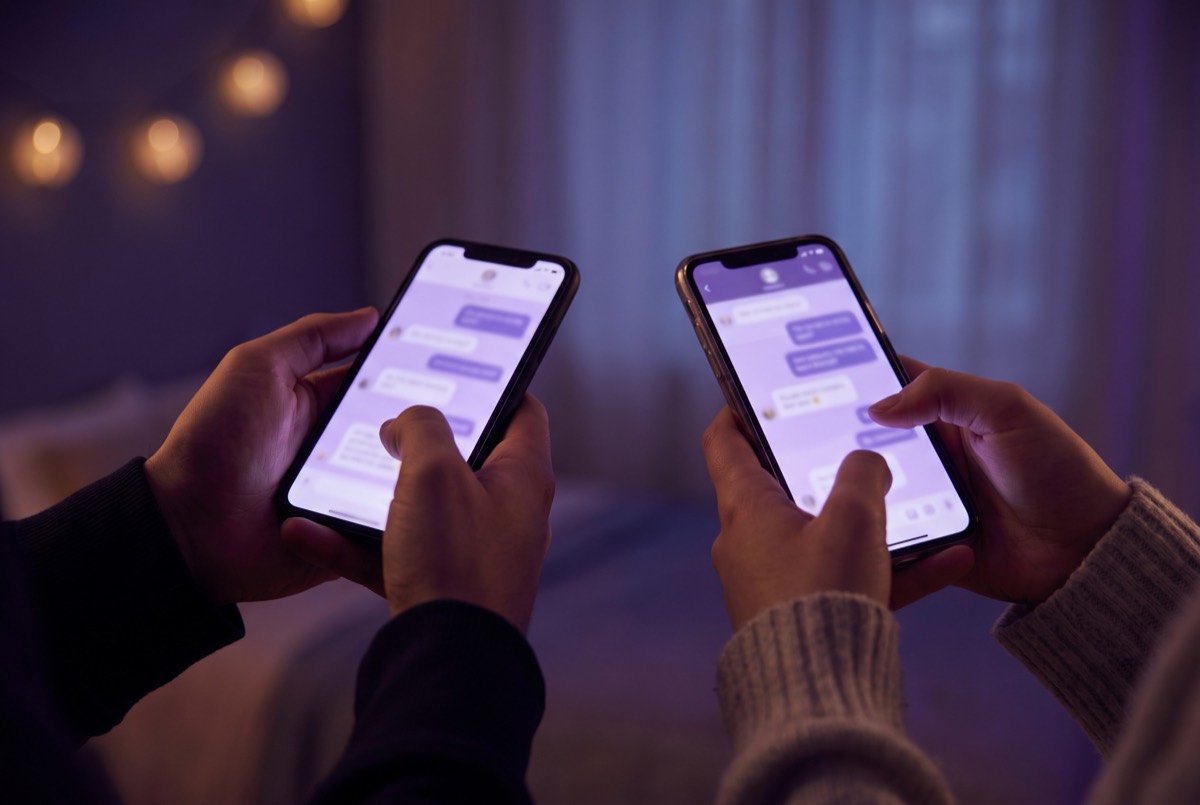
- Sexting is exchanging sexual messages, photos or videos by phone or messaging app between people who consent to it.
- Between consenting adults it is lawful; paid sexting on a platform is a commercial service, bound by the platform's rules and taxable like any income.
- Where anyone under 18 is involved it is an absolute prohibition in both the US and the UK, whatever the minor says about consent or age.
- Sextortion, demanding money or images under threat of exposure, is blackmail: up to 14 years in England and Wales, and extortion under US federal and state law.
Texts and figures checked on September 12, 2026. Sources are listed at the end of the article.
Sexting is the exchange of sexual messages, photos or videos by phone or messaging app between people who consent to it. On OnlyFans, Fansly or MYM the word also describes a commercial service: paid private conversations between a creator and an adult subscriber, charged per message or per unlocked piece of content.
Origin and meaning
The word blends "sex" and "texting". It spread in the 2000s with camera phones and was first used about private exchanges, often between teenagers, which is why it features so heavily in safety campaigns. The word says nothing about the setting: between two adults it is a private choice; with a minor it is a crime; for money, on a platform, it is a business.
On OnlyFans
Paid sexting is one of the main revenue streams of managed accounts: private conversation is where pay-per-view content and paid messages are sold. It follows each platform's rules, which prohibit among other things any content involving a minor, lack of express consent, sharing someone else's explicit image without their consent, and in-person meetings. The income is self-employment income, taxable from the first dollar or pound.
The sensitive question inside an agency is who is actually typing. When chatters write in the creator's name, she remains responsible for what is sent under it, and the agency needs written rules on what may be said or sent; how chatters are engaged matters. Letting fans believe they are talking to the creator personally raises a separate issue. A class action filed in 2024 against OnlyFans and several agencies was built on exactly that complaint; in May 2026 the federal court in California dismissed most of it, including every claim against the platform's operator, leaving a privacy claim under the Video Privacy Protection Act against some agencies.
What the law says
Consent. Sharing an intimate photo or film of someone without their consent is an offence in England and Wales under section 66B of the Sexual Offences Act 2003, in force since 31 January 2024. In the US, the TAKE IT DOWN Act makes knowingly publishing non-consensual intimate images a federal crime and, since May 2026, requires platforms to remove them within 48 hours of a valid request. An image received in a private chat is not an image you may repost.
Minors: an absolute prohibition. In the UK, taking, making, sharing or possessing with a view to sharing an indecent image of anyone under 18 is an offence under the Protection of Children Act 1978, even when the person sharing it is also under 18. An adult who sends a sexual communication to a child under 16 commits an offence under section 15A of the Sexual Offences Act 2003, punishable by up to two years. In the US, federal law prohibits producing, distributing or possessing sexual images of anyone under 18, and state laws add their own offences. A minor's apparent consent, or a lie about their age, changes nothing. At the slightest doubt about someone's age, the conversation stops and the account is reported to the platform; content involving a minor goes to NCMEC's CyberTipline in the US or to the Internet Watch Foundation in the UK.
Sextortion. Demanding money or more images under threat of exposing intimate content is blackmail, punishable by up to 14 years in England and Wales (section 21 of the Theft Act 1968), and extortion under US federal and state law. Creators are frequent targets, and so are some fans.
Mistakes to avoid
- Paying a blackmailer: payment almost never ends the threat and often invites the next one.
- Deleting the conversation before taking screenshots: it is the evidence for the police report.
- Handing sexting to a team with no written rules on age, consent and prohibited content.
- Reposting anything a fan sent you, even anonymised.
Related terms
Content shared without permission is removed with a DMCA takedown or a notice to the host; the full process is in our guide on what to do about a leak. Age checks on platforms are covered in age verification: what changed.
Frequently asked questions
What does sexting mean?
Is sexting illegal?
What should I do if I am being sextorted?
Sources and legal texts
- Sexual Offences Act 2003, section 15A (sexual communication with a child) legislation.gov.uk
- Protection of Children Act 1978, section 1 (indecent photographs of children) legislation.gov.uk
- Sextortion National Center for Missing & Exploited Children
- StopNCII.org, removal of non-consensual intimate images for adults Revenge Porn Helpline, SWGfL
- OnlyFans Operator Dismissed From 'Chatter Scam' Class Action (N.Z. v. Fenix International, C.D. Cal., No. 8:24-cv-01655) Bloomberg Law, 22 May 2026

This article is general information and does not replace advice tailored to your situation. OFM Legal is not a law firm: court proceedings are handled by our partner lawyers.